Dubai Bus Routes: What the Route Letters Mean?
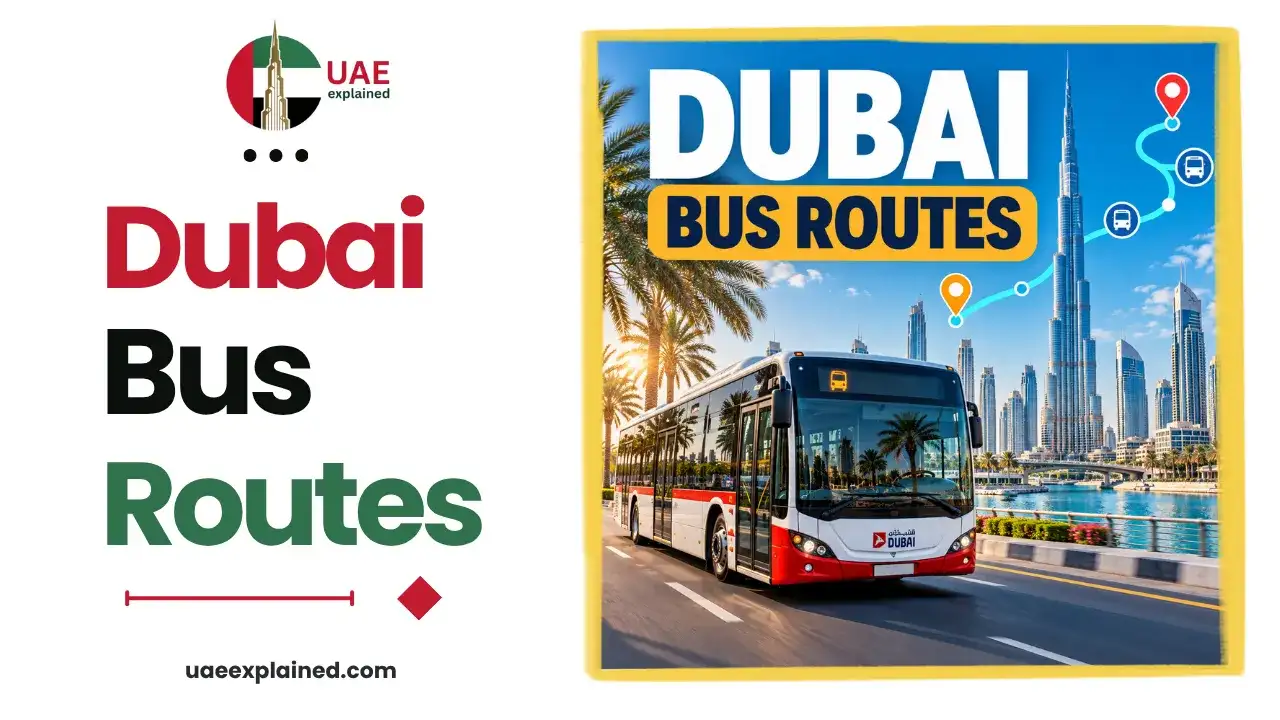
Dubai runs 186 bus lines, and the letter in front of the route number tells you what kind of service it is. E means intercity, X means express, F means a metro feeder, C means the central business districts, and N means a night bus. Fares are zone-based across seven zones, from AED 3 to AED 7.50, paid with a Nol card.
- Check the letter first, it tells you the service type.
- F routes are blue and connect to the nearest metro station.
- E routes leave Dubai entirely, so check before boarding.
The Dubai bus network at a glance
The bus network is the largest part of Dubai’s public transport by reach, filling in everywhere the two metro lines do not go. It is designed to work with the metro rather than compete with it, which is why so many routes are built around feeding passengers to stations.
| Item | Detail |
|---|---|
| Bus lines | 186 |
| Metro lines | 2 |
| Tram lines | 1 |
| Ferry lines | 14 |
| Urban coverage | About 82% of Dubai’s urban areas |
| Fare zones | 7 |
| Payment | Nol card only, no cash |
With 82% of urban Dubai covered, most journeys within the city are possible by bus, though not always quickly. The metro remains faster where it goes, because buses share the road with the traffic.
What each route letter means?
This is the single most useful thing to learn about Dubai buses. The prefix is not decoration, it tells you the type of service and therefore whether the bus is any use to you.
| Prefix | Type | What it means |
|---|---|---|
| No letter | Urban | Standard city routes, numbered only |
| X | Express | Crosses the city quickly with limited stops |
| F | Feeder | Serves the area around a metro station |
| C | Central business district | Serves Deira and Bur Dubai |
| N | Night | Late-night services |
| E | Intercity | Leaves Dubai for another emirate |
The E prefix is the one to watch. Boarding an E route by mistake means you are on your way to Sharjah, Ajman or Abu Dhabi rather than across town, and those routes charge flat intercity fares rather than the city zone fare. All the E routes are covered in our UAE bus timings guide.
The C routes are similarly worth recognising. Deira and Bur Dubai are the oldest and most tightly packed parts of the city, where street parking is scarce and driving is slow, so a dedicated set of routes covering those districts does real work. The C1 to the airport is the best known of them, and the only Dubai bus that runs around the clock.
The X routes are worth seeking out if you are crossing a long distance within Dubai, since limited stops make a real difference over the length of Sheikh Zayed Road.
Feeder buses and the metro
Feeder routes are the part of the network most visitors never notice and most residents rely on. They exist purely to connect neighbourhoods to the nearest metro station.
| Feature | Detail |
|---|---|
| Prefix | F |
| Colour | Blue, so they are easy to spot |
| Operates from | Dubai Metro stations |
| Serves | The residential areas surrounding each station |
| Hours | Throughout metro operating hours |
| Frequency | Frequent, timed around the metro |
The blue livery is a genuinely useful shortcut: if the bus is blue, it is going to or from a metro station. Because feeders run throughout metro hours, they also stop when the metro stops, so they are not an option once the last train has gone. Metro hours are in our Dubai Metro timings guide.
Zones, fares and payment
Dubai divides into seven fare zones, and what you pay depends on how many you cross rather than how far you travel.
| Journey | Fare |
|---|---|
| Within one zone | AED 3 |
| Across two zones | AED 5 |
| Across three zones | AED 7.50 |
| Intercity E routes | Flat fares, from AED 10 to AED 27 |
The same zone fares apply on the metro and tram, so switching between modes does not change what a journey costs. Payment is by Nol card and cash is never accepted, which is covered in detail in our Nol card guide.
A practical note on planning any Dubai bus journey: the S’hail app is the tool RTA itself points people towards, and it covers buses, metro, tram and marine routes together. Because the network is large and route numbers alone do not tell you the whole story, checking a specific journey there is far more reliable than working from a route list, particularly if your trip involves changing between modes.
The main bus stations
A handful of terminals do the heavy lifting, and all of them are on the metro.
| Station | Area | Known for |
|---|---|---|
| Union | Deira | Ajman, Fujairah and Ras Al Khaimah routes |
| Al Ghubaiba | Bur Dubai | Abu Dhabi, Al Ain and Sharjah routes |
| Ibn Battuta | Southern Dubai | Abu Dhabi routes from the Marina side |
| Al Sabkha | Deira | Hatta and airport routes |
| Satwa | Satwa | The 24-hour C1 airport service |
Because each terminal serves different destinations, picking the right one matters more than picking the right route number. The airport connections from several of these are in our Dubai airport bus routes guide.
Frequently asked questions
What does the letter on a Dubai bus route mean?
X is express with limited stops, F is a metro feeder, C serves the central business districts of Deira and Bur Dubai, N is a night bus, and E is intercity to another emirate. Routes with no letter are standard urban services.
What are the blue buses in Dubai?
Blue buses are feeder services, prefixed with F. They run from Dubai Metro stations into the surrounding neighbourhoods and operate throughout metro hours, so they stop running when the metro closes.
How much is a Dubai bus fare?
Zone-based, from AED 3 within one zone to AED 7.50 across three, with Dubai divided into seven zones. Intercity E routes are charged differently, at flat fares from AED 10 to AED 27 depending on the destination.
How many bus routes does Dubai have?
RTA operates 186 bus lines, alongside two metro lines, one tram line and 14 ferry lines. Together they cover about 82% of Dubai’s urban areas.
Last verified: October 2026 against RTA published network and fare information
Written by Roman Shah · Reviewed by the UAEexplained editorial team
Source: Roads and Transport Authority (RTA)
Spotted something that has changed? Tell us here and we will re-check it.