How to Remove Absconding Status in the UAE (Without a Lawyer)?
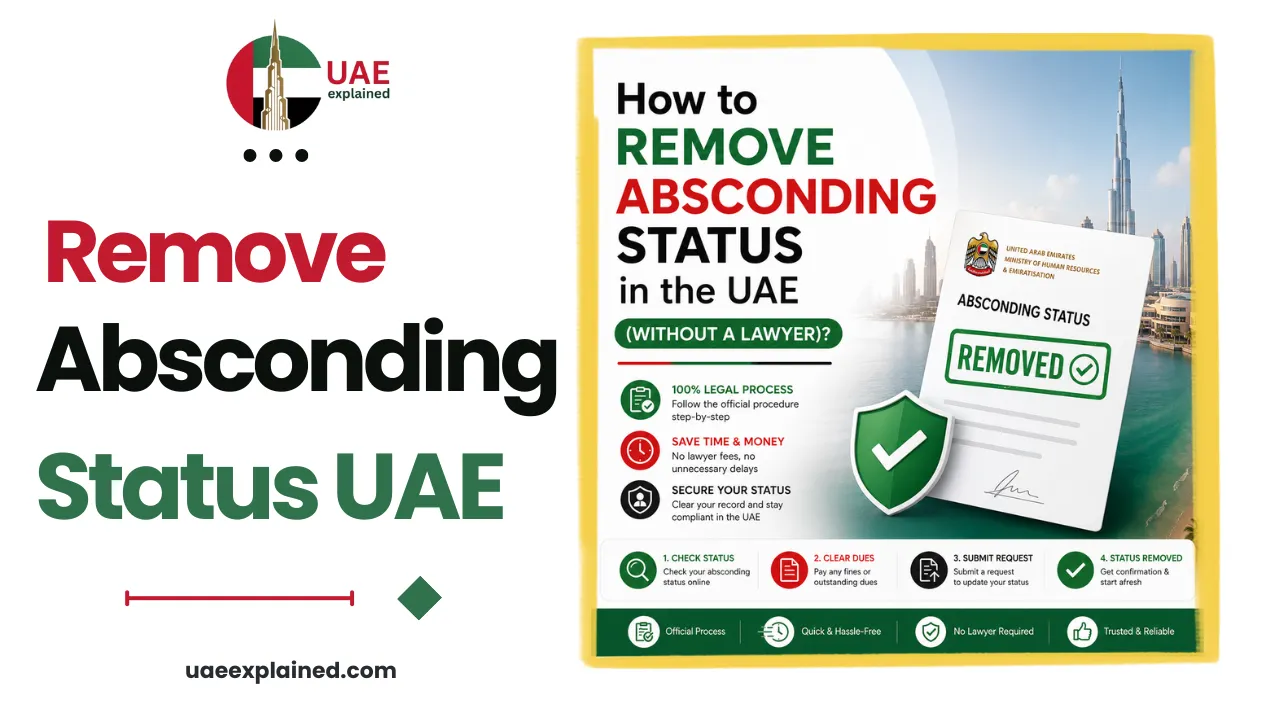
There are two ways to remove an absconding case in the UAE, and most do not need a lawyer. The simplest is to have your employer withdraw the report through MOHRE. If they refuse, or the report is false, you file a grievance with MOHRE and prove your case in mediation, which usually takes two to four weeks.
- Ask your employer to withdraw the report through MOHRE.
- If they refuse, file a grievance in the MOHRE app.
- Gather proof: attendance, leave, or travel records.
Which absconding removal route applies to you?
Before you do anything, work out which situation you are in, because that decides the fastest way out. An absconding case is not removed automatically when you find a new job, you have to actively clear it. Find your situation below.
| Your situation | Best route | What happens |
|---|---|---|
| Your employer is willing to fix it | Employer withdrawal | They cancel the report through MOHRE and pay the fee |
| The report is false, or the employer refuses | MOHRE grievance and mediation | You prove your case and MOHRE decides |
| The employer ignores the case entirely | Inspection Department | Decided in your favour → file removed, permit returned |
| The flag is on the immigration side | ICP department | You explain to ICP to clear the visa-side record |
If you have not confirmed a case actually exists yet, start with an absconding case check so you know exactly what you are clearing and on which system.
Route 1: Have your employer withdraw it
This is the cleanest fix. If the absence was a misunderstanding and your employer is willing, they can cancel the report directly. MOHRE has a dedicated service for exactly this, “Cancellation of an Absence from Work Complaint”.
The employer logs in to the MOHRE portal or app with UAE Pass, submits the application to withdraw the absconding complaint, and pays the applicable fee. Once MOHRE processes it, the flag is lifted and your work permit can be reinstated. Your only job here is to get your employer to agree and act, so put the request in writing and keep a copy.
Route 2: Dispute it yourself through MOHRE
If the report was false or your employer will not withdraw it, you do not need their permission to challenge it. You can file a grievance with MOHRE yourself, through the MOHRE app, a Tawafuq mediation centre, or the call centre on 600 590 000.
A complaint is on strong ground if you can show any of the following:
- Seven consecutive days had not actually passed since your last working day.
- You were present at work, or on authorised leave, during the reported period.
- The employer filed the report while a labour complaint was already pending.
Back it with documents, attendance logs, medical reports, travel records, and any messages with your employer. MOHRE then schedules a mediation session where you and the employer appear before a legal researcher who hears both sides, reviews the evidence, and decides. Strong proof is what wins it, so gather it before you file.
If your employer refuses to cooperate
An uncooperative employer is not the end of the road. If they ignore the grievance and do not attend mediation, MOHRE refers the case to its Inspection Department. If the decision goes in your favour, the absconding file is removed and your work permit is returned without the employer’s sign-off.
Remember that labour and immigration are separate systems. Clearing the MOHRE record does not automatically clear an immigration flag. So if the report reached the visa side, visit the ICP department and explain your situation to have the immigration record corrected too. A confirmed case also brings a one-year ban, so it is worth a labour ban check once the absconding flag is cleared.
How long it takes and do you need a lawyer?
With strong documentation, removing an absconding case through MOHRE usually takes two to four weeks from filing to resolution. Cases that need deeper investigation or end up referred to the Labour Court can run to two or three months.
For most people, a lawyer is not necessary. Employer withdrawal and MOHRE’s own grievance and mediation process are designed to be used directly by employees, and the channels are free to access.
A lawyer becomes worth considering only if the dispute escalates to court or the facts are genuinely contested. If your employer is also withholding pay or breaching the contract, you can file a MOHRE complaint alongside the grievance. The wider context is in our UAE work and labour guide.
Frequently asked questions
Can I remove an absconding case without a lawyer?
Yes, in most cases. The two main routes, having your employer withdraw the report through MOHRE, or filing a grievance yourself and proving your case in mediation, are designed to be used directly by employees and are free to access. A lawyer is generally only needed if the dispute escalates to the Labour Court.
How long does it take to remove an absconding case?
With strong supporting documents, MOHRE usually resolves it within two to four weeks of filing. More complex cases that require investigation, or that are referred to the Labour Court, can take two to three months. Having your evidence ready before you file is the single biggest factor in a fast outcome.
Can absconding be removed if my employer refuses?
Yes. You can file a grievance with MOHRE without the employer’s consent. If they do not attend mediation, the case is referred to the Inspection Department, and if it is decided in your favour the absconding file is removed and your work permit is returned. Evidence that the report was false or premature is key.
Does removing it from MOHRE also clear immigration?
Not automatically. Labour and immigration are separate systems, so clearing the MOHRE labour record does not necessarily remove an immigration flag. If the report reached the visa side, you may also need to visit the ICP department to explain your situation and have the immigration record corrected.
Last verified: June 2026
Reviewed by: UAEexplained editorial team
Source: Ministry of Human Resources and Emiratisation (MOHRE); Federal Authority for Identity, Citizenship, Customs and Port Security (ICP)