Dubai Abra and Marine Transport: Fares and Routes
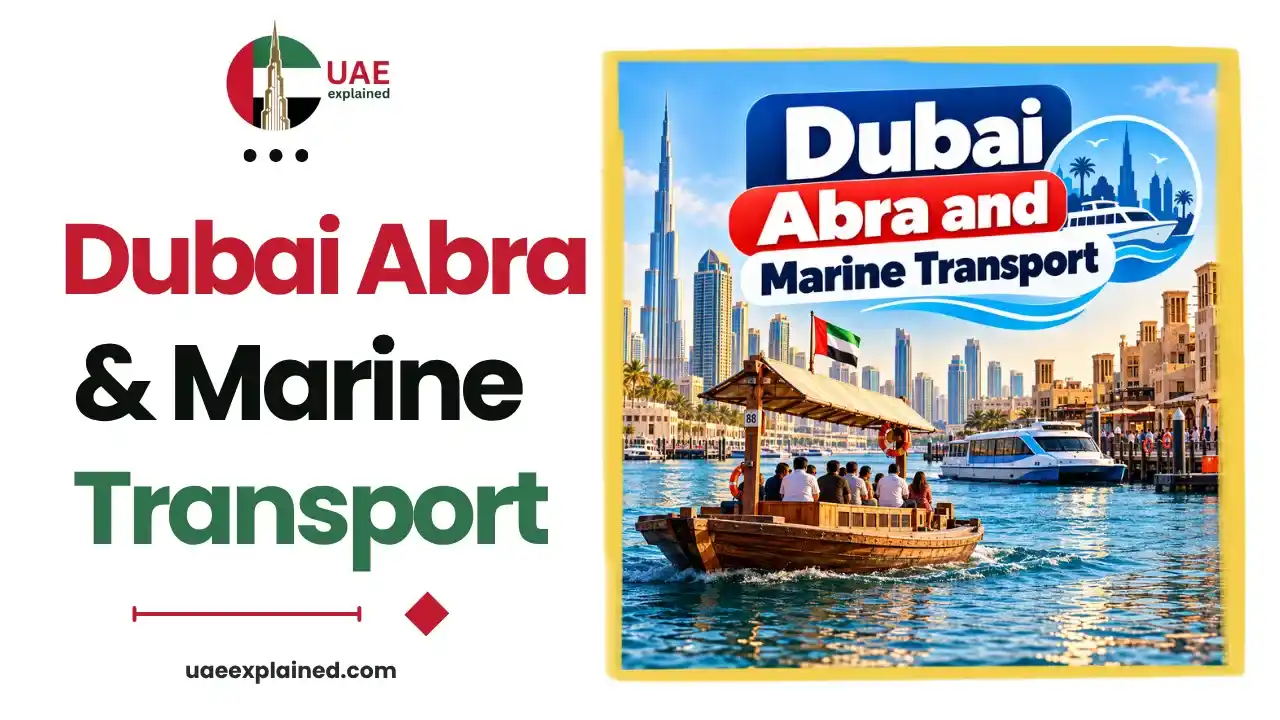
Dubai’s marine transport covers abras, water buses, water taxis and ferries. The traditional wooden abra across the Creek costs AED 1 and is the one service in Dubai that still takes cash, paid straight to the operator. Air-conditioned abras and other marine routes cost around AED 2 and accept Nol. The Creek crossing runs from 06:00 to midnight, and some routes operate 24 hours.
- Carry an AED 1 coin for the traditional abra.
- Use Nol for water buses, ferries and modern abras.
- Cross at Al Sabkha or Dubai Old Souq for the classic route.
Dubai marine transport at a glance
Dubai grew up around a creek, and the water is still part of the transport network rather than just a tourist attraction. RTA runs 14 ferry lines alongside abras, water buses and water taxis, and several of them are genuine commuter routes.
| Mode | Typical fare | Payment |
|---|---|---|
| Traditional rowing abra | AED 1 | Cash, paid to the operator |
| Motorised traditional abra | AED 1 | Cash or Nol depending on the boat |
| Air-conditioned abra | AED 2 | Nol |
| Water bus and ferry routes | From AED 2 | Nol |
| Private abra charter | AED 120 per hour | Arranged with the operator |
At AED 1, the abra is the cheapest journey available anywhere in the UAE transport network, cheaper than any bus, metro or tram fare in the country.
The abra and the AED 1 cash rule
Every other part of Dubai’s public transport refuses cash outright. Buses, the metro and the tram all require a Nol card, and there is no way to pay a driver. The traditional abra is the single exception.
You board the wooden boat, sit on the bench, and hand AED 1 directly to the operator during the crossing. No card, no gate, no tap. It is worth carrying a coin specifically for this, because arriving with only a Nol card and a bank card leaves you unable to pay for the most famous short journey in the city.
| Boat type | Fare | What to expect |
|---|---|---|
| Traditional wooden abra | AED 1 cash | Open-sided, bench seating, no air conditioning |
| Air-conditioned abra | AED 2 | Enclosed and cooled, Nol accepted |
| Private charter | AED 120 per hour | The whole boat, for a group or a tour |
The traditional boat is the better experience despite the lack of air conditioning. The crossing takes only a few minutes, the open sides give you the view, and the AED 1 fare has become a small piece of Dubai folklore in a city not otherwise known for cheap things.
Marine routes and fares
Beyond the classic Creek crossing, several marine routes serve newer developments along the water.
| Route | Runs between | Fare |
|---|---|---|
| CR1 | Al Sabkha and Dubai Old Souq | AED 1 on the traditional abra |
| CR2 | A second Creek crossing | AED 1 to AED 2 |
| CR11 | Al Jaddaf and Dubai Creek Harbour | AED 2 |
| BM2 | Al Jaddaf and Dubai Festival City | AED 2 |
CR1 is the one most visitors take, linking Al Sabkha on the Deira side with Dubai Old Souq on the Bur Dubai side. It is the crossing that connects the gold and spice souqs with the textile souq, and it does so in a few minutes for a single dirham.
The Al Jaddaf routes are more practical than picturesque, serving Dubai Creek Harbour and Festival City for AED 2, and functioning as genuine commuter links rather than sightseeing rides.
Timings, including the 24-hour route
Marine timings vary by route, and one of them never closes at all.
| Route | Hours |
|---|---|
| Traditional abras on CR1 | About 06:00 to midnight |
| CR2 | 24 hours a day |
| Other marine routes | Vary, generally daytime and evening |
A 24-hour Creek crossing is a genuinely useful thing to know, because it puts the abra alongside the C1 airport bus as one of the very few round-the-clock public transport options in Dubai. When the metro has closed and the last bus has gone, the Creek can still be crossed.
Connecting with the metro
The abra fits neatly into a metro journey, which is what makes it practical rather than merely charming.
- Take the Green Line to Al Ras for the Deira souqs.
- Walk to the abra station and cross for AED 1.
- Rejoin the Green Line at Al Ghubaiba on the Bur Dubai side.
- Continue on the metro, or pick up an intercity bus at Al Ghubaiba.
That loop is the classic way to see old Dubai, and it costs almost nothing. Both stations are on the Green Line covered in our Dubai Metro Green Line guide, and Al Ghubaiba is a major intercity terminal, as set out in our UAE bus timings guide. Nol details for the marine routes that accept it are in our Nol card guide.
Frequently asked questions
How much is an abra ride in Dubai?
The traditional wooden abra across the Creek costs AED 1, paid in cash to the operator. Air-conditioned abras cost around AED 2 and take Nol. A private charter of the whole boat is about AED 120 per hour.
Can I use a Nol card on the abra?
On the air-conditioned and modern motorised abras, yes. The traditional rowing abras still take AED 1 in cash, handed directly to the operator, which makes them the one part of Dubai public transport where a Nol card is not enough.
What time do Dubai abras run?
Traditional abras on the CR1 Creek crossing run from about 06:00 until midnight. The CR2 route operates 24 hours a day, making it one of the few round-the-clock public transport options in Dubai.
Which abra route crosses to the souqs?
CR1, which links Al Sabkha on the Deira side with Dubai Old Souq on the Bur Dubai side. It connects the gold and spice souqs with the textile souq, and the crossing takes only a few minutes.
Last verified: October 2026 against RTA marine transport information. Abra fares and boat types vary by station, so confirm at the jetty.
Written by Roman Shah · Reviewed by the UAEexplained editorial team
Source: Roads and Transport Authority (RTA)
Spotted something that has changed? Tell us here and we will re-check it.