Employer Fine for Not Cancelling a Visa in the UAE: 2026 Guide
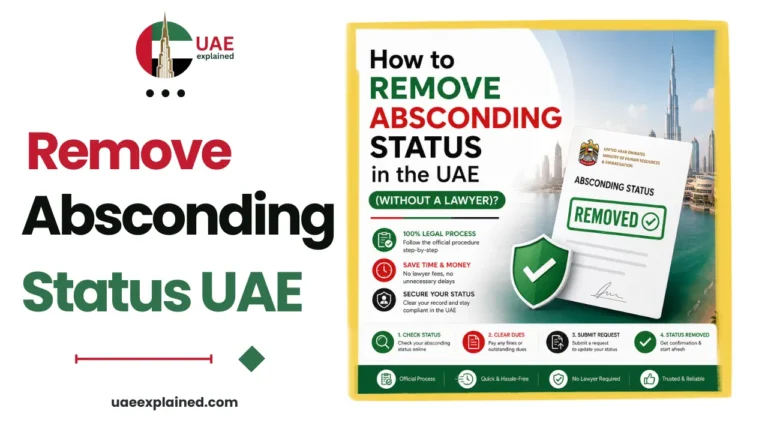
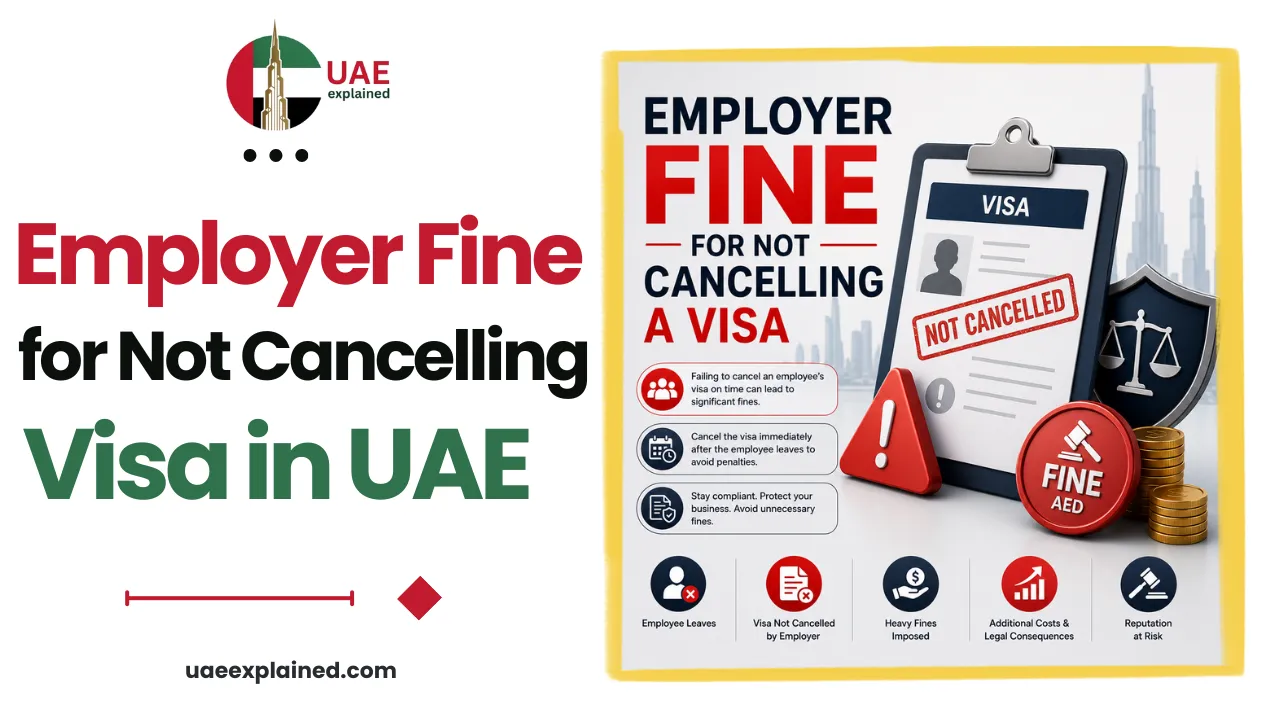
In the UAE, cancelling your visa is the employer’s responsibility, not yours. Once it is cancelled you get a 30-day grace period to find new work or leave before overstay fines of AED 50 a day begin. An employer who fails to cancel on time risks penalties, a frozen visa quota, and trade-license problems.
- Ask your employer in writing to cancel your visa.
- Confirm the cancellation in the ICP app.
- If they refuse, file a MOHRE complaint.
Whose job is it to cancel the visa?
When your employment ends, your sponsoring employer is the one who must cancel your work permit and residence visa through MOHRE and the Federal Authority for Identity, Citizenship, Customs and Port Security (ICP). It is a legal obligation on the company, not something you do yourself. Cancelling correctly also releases their visa quota and keeps their records clean, so a responsible employer has every reason to do it promptly.
That said, the consequences of a delay fall on both sides, which is why it is worth understanding both what the employer risks and what protection you have.
What the employer risks if they don’t?
The UAE has steadily tightened enforcement, and MOHRE and ICP systems are increasingly integrated, so a non-compliant cancellation is flagged quickly. An employer who fails to cancel on time is exposed to real consequences.
| The employer risks | What it means |
|---|---|
| MOHRE penalties | Fines that, for serious labour and visa violations, reach up to AED 1 million |
| A frozen visa quota | They cannot sponsor new employees until the issue is resolved |
| Trade-licence complications | Renewals and other approvals can be held up |
| Overstay liability | Exposure tied to the lapsed, uncancelled visa |
The headline million-dirham figure is the top of the penalty band for serious violations under the 2024 amendments to the labour law, not a flat fee for a late cancellation, but the broader point holds: it is far cheaper and simpler for an employer to cancel on time than to let it slide.
What it means for you: the 30-day grace?
Once your employment visa is cancelled, you automatically get a 30-day grace period. This is protected time: during it you keep legal residence, and you can look for a new job, transfer to a new employer. It’s also to collect your end-of-service benefits, and file complaints, all without any overstay penalty. After the grace period ends, overstay fines of AED 50 a day begin to accrue, and they must be cleared before you can leave the country or take a new visa.
The important nuance is that this clock starts at cancellation. If your employer never cancels and the visa simply lapses, you do not get the clean 30-day window in the same way, which is exactly why a delayed cancellation is a problem you should not ignore. For the fines themselves, see our guide to the UAE overstay fine in 2026.
If your employer hasn’t cancelled your visa
If your job has ended and your visa is still active weeks later, act rather than wait. Ask your employer in writing to complete the cancellation, and confirm whether it has been done by running a visa cancellation status check. Keep a record of your last working day and your requests.
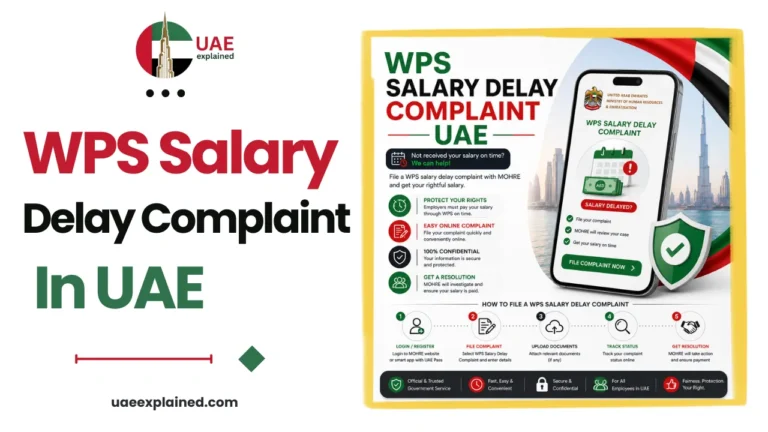
If they refuse or stall, you can file a MOHRE complaint covering both the failure to cancel and any unpaid dues, remember that your end-of-service benefits must be paid within 14 days of your last working day, regardless of when the visa is cancelled. The wider set of options around leaving a job is in our UAE work and labour guide.
Frequently asked questions
Who is responsible for cancelling my UAE visa?
Your sponsoring employer is. After your employment ends, the company must cancel your work permit and residence visa through MOHRE and ICP. It is a legal obligation on the employer, not a task for the employee. Cancelling on time also frees the company’s visa quota, so there is no legitimate reason for a long delay.
What fine does an employer face for not cancelling a visa?
Failing to cancel on time exposes an employer to MOHRE penalties, a frozen visa quota, and trade-licence complications. Fines for serious labour and visa violations under the 2024 amendments reach up to AED 1 million. The exact penalty depends on the violation, but the consequences are significant enough that compliant employers cancel promptly.
What happens to me if my employer doesn’t cancel my visa?
Your residence status stays in limbo, and you cannot cleanly start a new job or claim the protected 30-day grace period until the visa is cancelled. If it lapses uncancelled, you risk overstay exposure. Push your employer to cancel, confirm with a visa-status check, and file a MOHRE complaint if they refuse.
How long do I have after my visa is cancelled?
You get an automatic 30-day grace period from the cancellation date, during which you keep legal residence and can find new work, transfer sponsor, or leave without penalty. After those 30 days, overstay fines of AED 50 a day apply and must be paid before departure or before a new visa can be issued.
Last verified: July 2026
Reviewed by: UAEexplained editorial team
Source: Ministry of Human Resources and Emiratisation (MOHRE); Federal Authority for Identity, Citizenship, Customs and Port Security (ICP)